Nobody Searches Past Page One. That's the Whole Problem.
Think about the last time you searched for something on Google. How far did you scroll? Did you click to page two?
Most people don't. Studies consistently show that the first five results on Google capture the majority of all clicks. Everything below that gets a fraction of the attention. Page two might as well not exist for most searches.
That's the core problem SEO solves. If your website isn't showing up where people are actually looking, it doesn't matter how good your product is or how well your site is designed. The people who need what you offer simply won't find you.
SEO is the work you do to change that.
So What Actually Is SEO?
SEO stands for Search Engine Optimization. At its most basic, it's the process of making your website easier for search engines like Google to understand, so they show it to people searching for topics related to your business.
When someone types a query into Google, the algorithm goes through billions of pages in a fraction of a second and decides which ones are most relevant and trustworthy. SEO is how you signal to that algorithm that your page deserves a spot near the top.
It's not about tricking Google. The days of stuffing a page with keywords and gaming your way to the top are long gone. Modern SEO is about genuinely understanding what your audience is searching for and then creating content and a website experience that properly answers those questions.
Why SEO Still Matters (More Than Ever, Actually)
A lot of people treat SEO like it's some old-school marketing tactic that's slowly being replaced by social media and paid ads. That's not what the data shows.
Organic search still drives more traffic to websites than any other channel. And unlike paid ads, that traffic doesn't stop the moment you stop spending money. A well-optimized page can bring in consistent visitors for months or years after it's published.
A few things have made SEO more important recently, not less.
Google has gotten significantly smarter. Algorithm updates have shifted the focus away from keyword frequency toward actual intent. Google is now much better at understanding what a searcher actually wants, not just what words they used. That means thin, shallow content written just to rank doesn't work anymore. Content that genuinely helps people does.
Voice search has changed the way people phrase queries. When someone types, they write "best pizza near me." When they speak, they say "what's the best pizza place open right now near me?" Optimizing for natural, conversational language has become a real part of the job.
Mobile-first indexing is now the default. Google crawls and ranks the mobile version of your site first. If your site works beautifully on desktop but is slow or awkward on a phone, that directly hurts your rankings.
Competition online has increased across every industry. More businesses have moved online, which means more competition for the same search terms. Solid SEO is a bigger differentiator now than it was a few years ago.
How SEO Actually Works: The Three Pillars
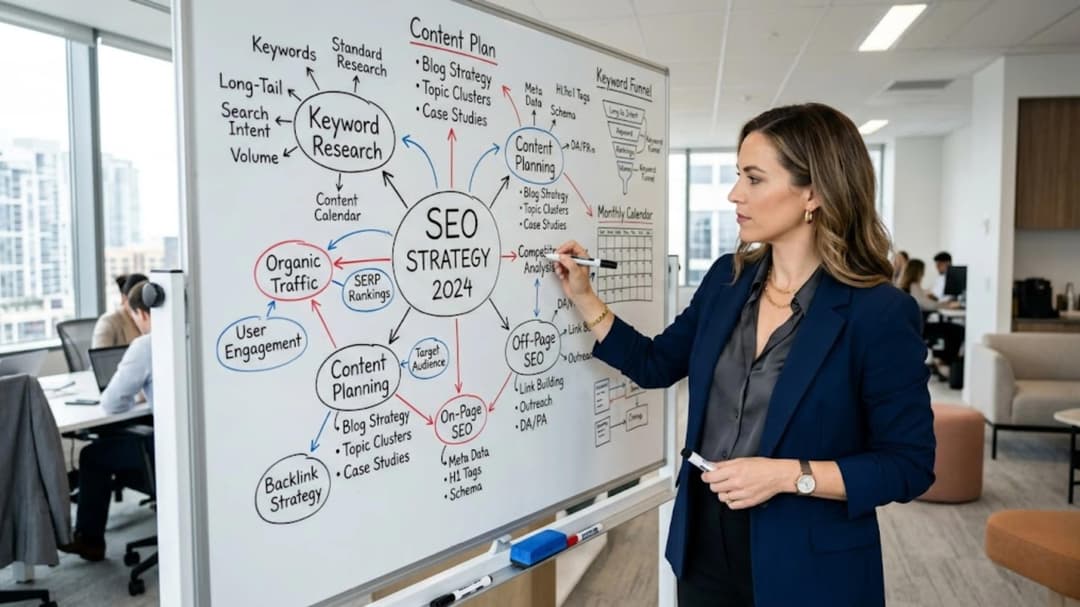
SEO is usually broken down into three areas. Understanding what each one covers gives you a clearer picture of why the work involves more than just writing content.
On-Page SEO
This is everything that happens on the page itself. It's where most beginners start because it's the most direct and controllable.
Title tags and meta descriptions. The title tag is what shows up as the clickable headline in Google search results. The meta description is the short summary beneath it. Both need to be clear, relevant, and include the keywords your audience is actually using.
Header structure. Using H1, H2, and H3 headings properly helps Google understand what a page is about and how the content is organized. It also makes the page easier to read for actual humans, which matters more than people realize.
Keyword placement. This doesn't mean stuffing a keyword into every sentence. It means using relevant terms naturally throughout the content in places where they make sense, including the intro, headings, and body copy.
Internal linking. Linking between pages on your own site helps Google discover more of your content and understand how your pages relate to each other. It also keeps visitors on your site longer, which is a positive signal.
Image optimization. Adding alt text to images helps Google understand what they show. It also improves accessibility, which is a bonus.
Off-Page SEO
This covers everything that happens outside your website that signals to Google that your site is trustworthy and worth ranking.
The biggest factor here is backlinks. When other reputable websites link to yours, Google treats it as a vote of confidence. The more quality sites linking to you, the more authority your site builds over time.
Getting those links is where the real work comes in. Guest posting on industry blogs, creating content that other sites naturally want to reference, building relationships with publishers in your space. None of it happens overnight, but it compounds steadily over time.
Social media presence and general brand mentions also play a supporting role, even if they're not direct ranking factors..
Technical SEO
This is the behind-the-scenes work that affects how well search engines can crawl and index your site. A lot of businesses have great content that barely ranks simply because there are technical issues quietly getting in the way.
Key areas include:
Page speed. Slow pages frustrate users and get penalized by Google. This is one of the most directly measurable SEO factors, and it's often one of the most neglected.
Mobile responsiveness. Your site needs to work properly on phones, full stop.
HTTPS security. Google treats sites with a valid SSL certificate as more trustworthy. If your site is still running on HTTP, that's a problem worth fixing immediately.
Crawlability. Google needs to be able to access and read your pages. Broken links, incorrect settings, or pages accidentally blocked from indexing can all silently hurt your rankings without you realizing it.
Where to Start If You're a Complete Beginner
You don't need to do everything at once. Here's a sensible order for getting started.
Start with keyword research. Before you write or optimize anything, understand what your audience is actually searching for. Tools like Google Keyword Planner, Ubersuggest, and Ahrefs help you find relevant search terms and understand how competitive they are. When you're starting out, focus on specific, lower-competition phrases rather than trying to rank for broad terms that massive sites already own.
Fix the technical basics. Make sure your site loads fast, works on mobile, and is running on HTTPS. Use Google Search Console, it's free, and it will flag any crawling or indexing issues that need attention.
Write content that actually helps people. Pick a topic your audience searches for, answer it properly, structure it clearly with headings, and make it genuinely useful. One well-written, thorough piece beats five shallow ones every time.
Optimize what's already there. If you have existing pages, go through the title tags and meta descriptions. Make sure they're clear, include relevant keywords, and give someone a reason to click.
Start building links gradually. Reach out to relevant blogs for guest posting opportunities. Create content worth linking to. This takes time but it's what builds lasting authority.
Tools Worth Having in Your Corner
You don't need to pay for everything upfront. Here's a honest look at what's worth using:
Google Search Console is free and essential. It shows you what queries your site is ranking for, which pages are getting impressions, and any technical issues Google has flagged.
Google Analytics tells you where your traffic is coming from and what people do once they land on your site.
Ubersuggest has a generous free tier and is a solid starting point for keyword research without committing to a paid plan.
Ahrefs and SEMrush are the industry standards for serious keyword research, competitor analysis, and backlink tracking. Both have a learning curve and a price tag, but they're worth it once you're ready to go deeper.
Google PageSpeed Insights is free and tells you exactly how your site performs on speed, with specific suggestions for improvement.
The Honest Reality About SEO
SEO is not a switch you flip. It's not something you set up once and forget about. It's an ongoing process that rewards consistency and patience.
Most sites don't see meaningful results for the first few months. That's normal. The businesses that win at SEO long-term are the ones that treat it as a channel worth investing in steadily, not a quick fix.
The good news is that the fundamentals haven't changed all that much despite everything else shifting. Understand what your audience is searching for. Create content that genuinely answers those questions. Build a site that's fast and easy to use. Earn links from credible sources. Do that consistently and results follow.
How Innomactic Can Help
Knowing the theory is one thing. Applying it to your specific website, your specific audience, and your specific competitive landscape is where most businesses get stuck.
At Innomactic, we handle the full picture. From technical audits and keyword strategy to content planning and link building. We don't do cookie-cutter SEO packages. We look at what your site actually needs and build a plan around that.
If you're not sure where your site currently stands or why it's not ranking the way it should, the best starting point is an honest audit.
Get a free SEO audit from Innomactic We'll tell you exactly what's working, what isn't, and what to prioritize first.